
Scott County Sex Offender Checks
The official starting point is the Tennessee Sex Offender Registry search, managed by the Tennessee Bureau of Investigation. It accepts combined optional terms and can filter the statewide file to Scott County. A county result is not a separate sheriff list. It is the state notification record built from information registrants give to their registering agencies. TBI says the database is updated daily, yet facts may change or be inaccurate. Save or print the profile when the date of the search matters.
Local routing depends on residence. Oneida residents generally report through Oneida Police. Winfield residents should confirm the designated officer through the Winfield Municipal Building. People in unincorporated Scott County and Huntsville route through the Sheriff's Department. TDOC can register a supervised person during a transition. Those offices maintain registration information, while TBI presents the public search. The registry is not a full criminal-history database and does not list each person ever convicted of a sex offense.
Scott County Registry Search Controls
TBI requires acceptance of its disclaimer before the search form opens. Fields are optional and may be combined, with up to eight search terms. Partial names work. A broad county filter can reveal Scott County profiles, while name-only or address-only modes narrow how the form reads the entries. The expandable filter offers more choices such as city, ZIP code, offender ID, and offense when available. Do not guess at an offender-status label because the accessible official capture did not expose the current options.
The TBI registry interface shows the actual search design used for Scott County records.
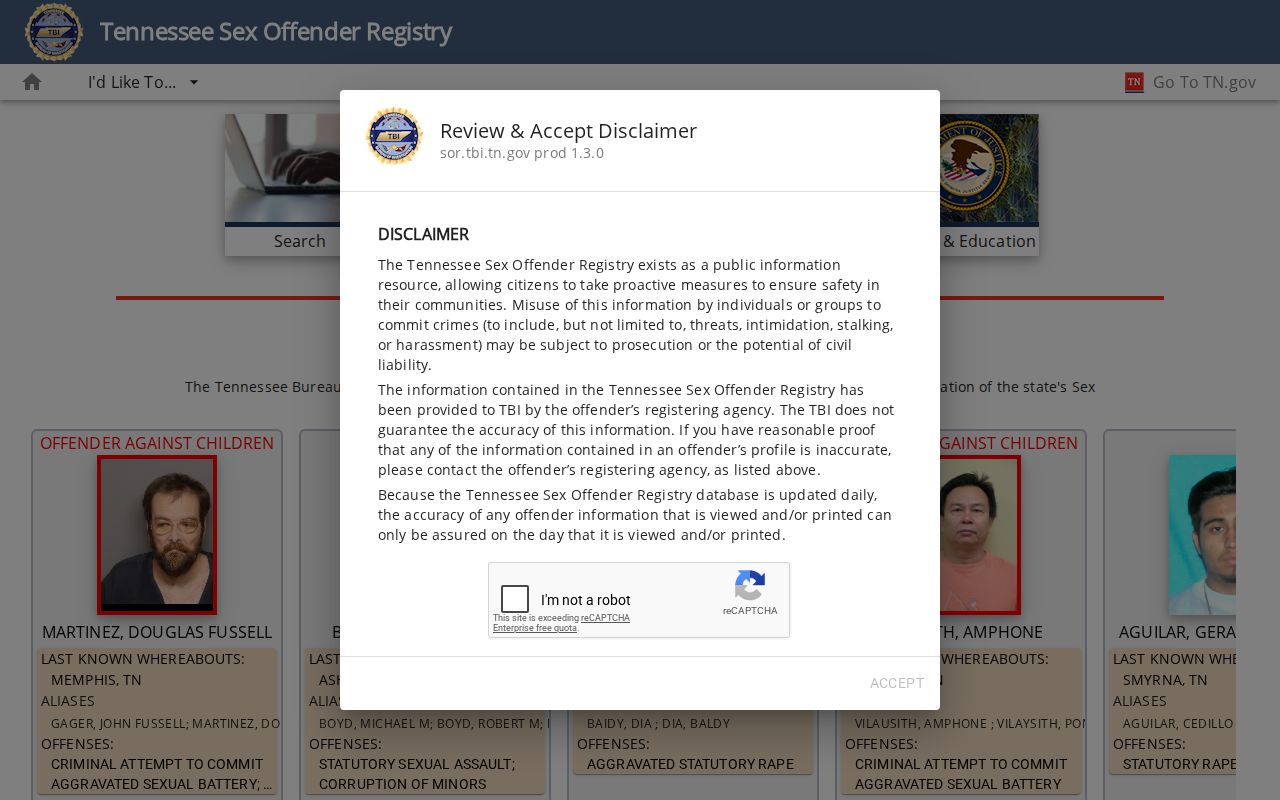
That interface supports a county-oriented lookup without turning the result into a finding about current conduct.
Tennessee Sex Offender Registry Searches
Start with a narrow fact you can verify. A correct spelling, known ZIP code, or Offender ID can help distinguish similar names. The result page may let a reader open Full Details by selecting the photo, print a profile PDF, subscribe with the envelope action, or send information through the tips control. Each action serves a different need. Full Details explains the public record, Alerts track later changes, and Tips/Bad Info sends a possible correction for review.
- Open the official registry and accept its conditions of use.
- Enter a name or address term, or select Scott in the County filter. Add only known facts.
- Review the result list and compare identifying details without assuming a name alone proves a match.
- Open Full Details, note the registering agency and update dates, then print the profile if a dated record is useful.
| Field or control | Type | Required | Use |
|---|---|---|---|
| Search for any offender | Text | No | General search term |
| Include Prisons/Incarcerated | Checkbox | No | Adds incarcerated results |
| Name Only / Address Only | Checkboxes | No | Restricts the search mode |
| County | Filter | No | Select Scott for county results |
| Additional filters | Expandable | No | May show city, ZIP, ID, or offense fields |
Use Clear between unrelated searches so old terms do not remain in the query. If a likely profile does not appear, try a partial name and fewer filters before concluding that the public registry has no result.
Scott County Cross-Border Registry Searches
Scott County sits at Tennessee's Kentucky border. A Tennessee-only county filter stops at that state line even when the address of concern does not. The National Sex Offender Public Website, operated by the U.S. Department of Justice, searches records supplied by participating jurisdictions. It is a useful second layer for a person, trip, or address connected to both states. NSOPW relays source-jurisdiction data, so the underlying Tennessee profile remains the place to review Tennessee details and reporting agency information.
The official national search source shows how participating registry systems are brought into one cross-state query.
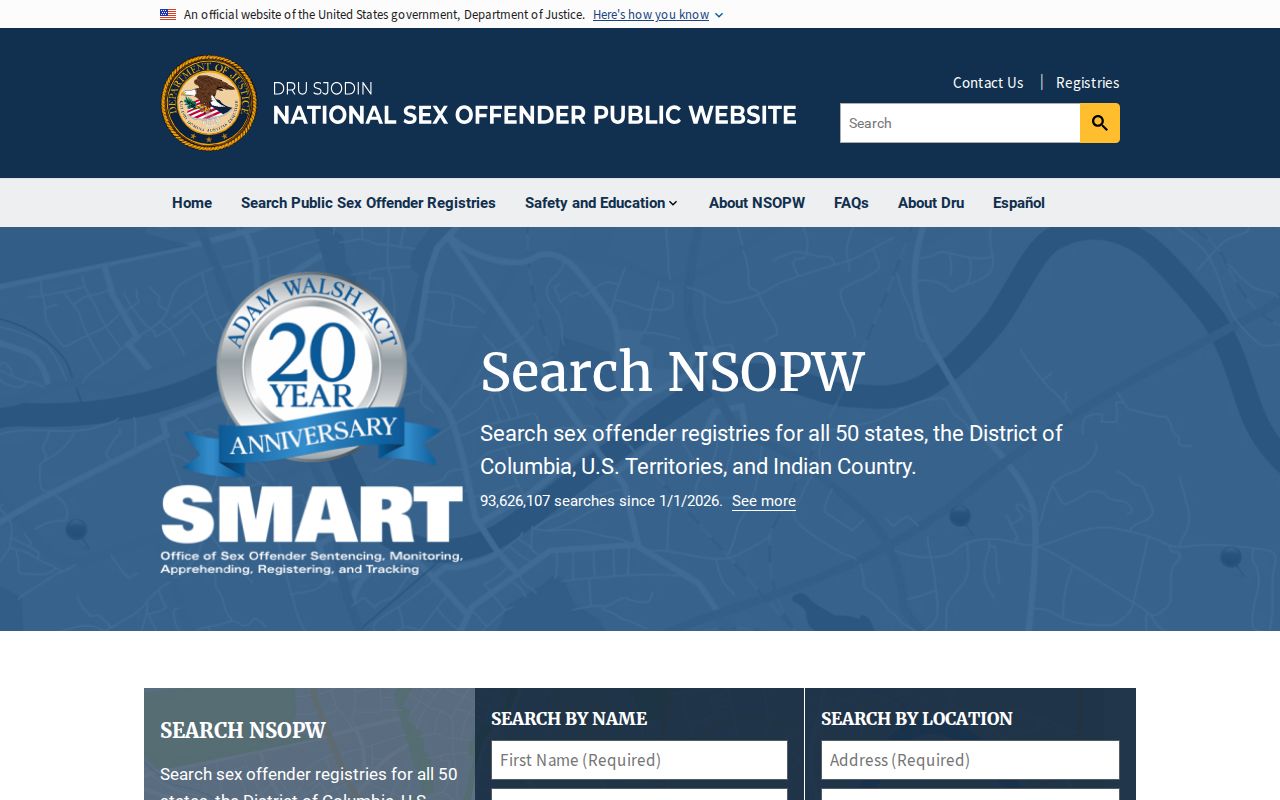
This second layer matters in northern Scott County because a short trip can cross into another registry's jurisdiction.
Search both systems with the same known facts, but do not expect identical layouts or update times. If NSOPW and TBI appear to conflict, use the registering agency listed on the Tennessee profile to seek clarification. A missing national result does not erase a state profile.
Registry Profiles: What They Show
A Full Details profile can carry far more than a name and photograph. Read it as a set of dated fields. The offense table may include an offense date, description, TCA code, and statutory text. Address, vehicle, and physical-description fields help confirm identity. Status, last report, last information update, and registering agency fields show how the public record was maintained. A blank field or “Not Available” does not by itself establish noncompliance.
| Identity | Displayed name, aliases, photograph, Offender ID, and physical descriptors |
|---|---|
| Offense | Date, description, Tennessee code, and expandable statutory text |
| Locations | Typed addresses, city, state, ZIP, county, and agency; employer when lawfully displayed |
| Vehicles | Year, color, make, model, body type, tag, and tag state |
| Registration | Status, report and update dates, registering agency, and sometimes parole officer |
| Actions | Alerts, Print, Tips/Bad Info, and Map |
The “Offender Against Children” flag is an added statutory designation. It is not a substitute for the category, offense history, or dates shown elsewhere on the Scott County registry profile.
Scott County Registry ZIP Alerts
The TBI registry alert page supports two precise types of follow-up. A user may follow a specific Offender ID or add a ZIP code after supplying an email address. The page includes Load and Remove All controls, an Offender ID lookup, and tables for followed profiles and followed ZIP codes. TBI does not promise an address-radius alert. Describe the service as profile and ZIP subscriptions, not as a live neighborhood geofence.
Alerts help track a public profile after the first Scott County sex offender lookup. They do not replace a new search before relying on old information. Email delivery can fail, and an alert reflects data received by the registry. For immediate safety concerns, contact law enforcement. For a possible profile error, use the listed registering agency or the Tips/Bad Info control.
Note: A subscription is a notice aid, not a guarantee that every move or status change will arrive without delay.
Registration Levels and Duties in Tennessee
Tennessee's public categories are not the federal Tier I, II, and III labels. The state uses sexual offender, violent sexual offender, and violent juvenile sexual offender, with “offender against children” as an additional designation. Verification schedules and possible termination depend on the statute and facts. A sexual offender may seek termination only after the required period and compliance review. It is not automatic. Violent sexual offenders generally have lifetime registration.
| Category or circumstance | Verification | Duration or public status |
|---|---|---|
| Sexual offender | Annually in the birthday window | Termination request may be possible after 10 years from sentence expiration and substantial compliance |
| Violent sexual offender | Quarterly in March, June, September, and December | Lifetime |
| Victim under 13 | Category schedule plus updates | Lifetime |
| Two or more qualifying convictions | Category schedule | Lifetime |
| Out-of-state registrant | Local reporting and equivalency rules | At least 10 years after sentence expiration or 5 years after entering Tennessee, whichever is later; lifetime rules can control |
| Violent juvenile sexual offender | Statutory reporting | Not displayed on the public website |
All categories must report required changed information in person within 48 hours. Online identifiers must be reported within 72 hours. The official texts of Tenn. Code Ann. § 40-39-202 and § 40-39-203 supply the definitions and reporting framework.
Correcting Scott County Registry Information
A profile can change daily. TBI states that much of the registry information comes from the registrant through a registering agency and does not guarantee accuracy. When an address, vehicle, identity field, or report date looks wrong, first note the profile's Offender ID, update date, and registering agency. Use Tips/Bad Info or give reasonable proof to that agency. Do not confront the person shown.
Possible noncompliance belongs with local law enforcement or TBI registry staff at 1-888-837-4170 or tbisormgr@tbi.tn.gov. Oneida Police can be reached at (423) 569-4255 for Oneida routing. Winfield's designated contact should be confirmed through the municipal office at (423) 569-6139. For Huntsville or unincorporated Scott County, call the Sheriff's Department at (423) 663-3111. Exact local appointment hours and registry fees were not published, so callers should confirm before a visit.
Scott County Registry Verification Cycles
Annual and quarterly verification describe how often a category reports on its regular cycle. They do not postpone the separate duty to report a required change. A person classified as a sexual offender generally verifies during the birthday window, seven days before through seven days after. A violent sexual offender reports quarterly. Changes in required information carry the shorter deadlines stated above.
Judicial diversion does not always erase registry duties. TBI describes narrow termination treatment for certain diversion offenses after May 24, 2019, while violent offenses and cases involving a victim under 13 remain disqualifying. Read the category, offense, and disposition together. The TBI registry information and law library is the proper source for current forms and statutory text.
Using Registry Information Lawfully
Registry information supports personal safety and community awareness. It does not authorize threats, intimidation, stalking, harassment, or vigilante action. Scott County residents should verify the profile, use alerts for follow-up, and report suspected errors or violations to the agency shown. Tennessee also permits a county or city, after a prescribed two-thirds vote, to adopt an optional community-notification system under Tenn. Code Ann. § 40-39-217. No official proof of such an adopted Scott County program was located.
The Tennessee public-records guidance explains why an agency request may serve as a fallback when a releasable public record needs clarification.
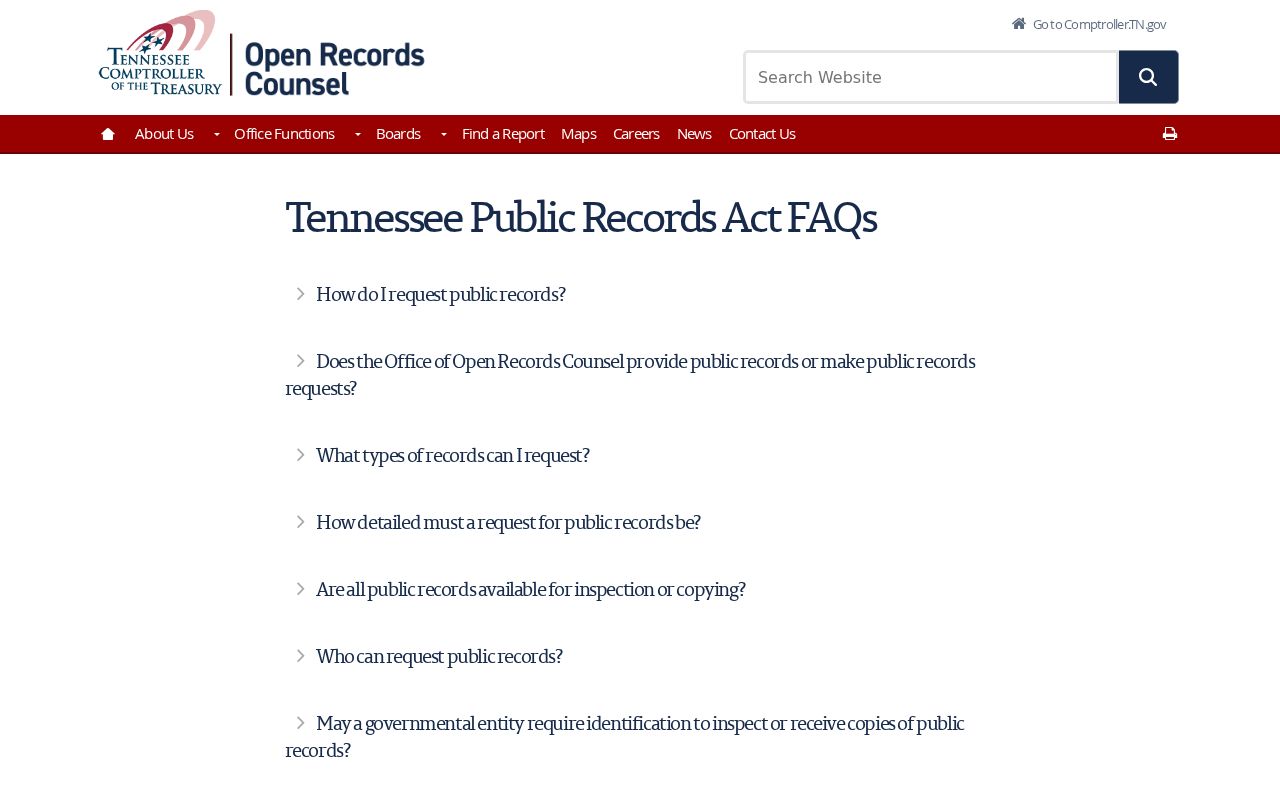
That fallback does not override registry-specific limits, but it helps a requester direct a clear inquiry to the office that holds the original record.
Misuse warning: TBI's official registry notice says using the information to commit a crime, including threats, intimidation, stalking, or harassment, can result in criminal prosecution and civil liability. Tenn. Code Ann. § 40-39-208 concerns violations by registrants and should not be misstated as a special public-user offense.